Search This Blog

Friday, 3 June 2016

Mysore


One of South India’s most famous tourist destinations, Mysore. Traditionally called as Mysuru, is known for its glittering royal heritage and magnificent monuments and buildings. Its World Heritage–listed palace may be what brings most travellers here, but it’s also a thriving centre for the production of premium silk, sandalwood and incense. These days ashtanga yoga is another drawcard, attracting visitors worldwide with its reputation as one of India’s best places to practice yoga.

The city was earlier the capital of the Wodeyar rulers. The Wodeyar rulers were great patrons of art and culture, which you can see in the rich heritage of the city. Besides its numerous palaces and royal buildings, Mysore city is also known for proximity to several other places of interest such as Srirangapatna, Krishna Raj Sagra dam and Sivasamudram falls.


In addition to its numerous attractions, the Mysore city is also known for sandalwood products and the Dasara festival (Navaratri) held every year. The Mysore Dasara is famous far and wide and attracts people from all parts. The name Mysore is said to have been derived from Mahishuru, which in turn has come from Mahisha. According to legends, the area around the Mysore city was once under the demon king Mahishasura, who was defeated and killed by goddess Chamundeshwari.

Located in the tropics, the Mysore has a moderate climate. If you are visiting Mysore during the summer months then you will see that the temperature varies from 20° Celsius to 35° Celsius while the winter temperature of Mysore remains in the range of 12° Celsius to 30° Celsius. Travel to Mysore and explore the different facets of the cultural capital of Karnataka state.

Tourist Attraction in Mysore:

1) Mysore Palace
2) Chamundi Hill
3)Shri Chamundeshwari Temple
4) Jaganmohan Palace
5) Mysore Zoo
6) St. Philomena's Cathedral
7) Karanji Lake Nature Park

Saturday, 2 January 2016

Captain Manoj Kumar Pandey: Story of a brave Indian soldier

Captain Manoj Kumar Pandey, was an officer of the Indian Army of the regiment 1/11 Gorkha Rifles, posthumously awarded the India's highest military honour, Param Vir Chakrafor his audacious courage and leadership during adverse times. He died during the attack on Jubar Top, Khalubar Hills in Batalik Sector, Kargil

Lieutenant Manoj Kumar Pandey took part in a series of boldly led attacks during ‘operation Vijay ', forcing back the intruders with heavy losses in Battlik including the capture of Jaubar Top. On the night of 2/3 July 1999 during the advance to Khalubar as his platoon approached its final objective, it came under heavy and intense enemy fire from the surrounding heights. Lieutenant Pandey was tasked to clear the interfering enemy positions to prevent his battalion from getting day lighted, being in a vulnerable position. He quickly moved his platoon to an advantageous position under intense enemy fire, sent one section to clear the enemy positions from the right and himself proceeded to clear the enemy positions from the left. Fearlessly assaulting the first enemy position, he killed two enemy personnel and destroyed the second position by killing two more. He was injured on the shoulder and legs while clearing the third position. Undaunted and without caring for his grievous injuries, he continued to lead the assault on the fourth position urging his men and destroyed the same with a grenade, even as he got a fatal burst on his forehead. This singular daredevil act of Lieutenant Manoj Kumar Pandey provided the critical firm base for the companies, which finally led to capture of Khalubar. The officer, however, succumbed to his injuries.
Lieutenant Manoj Kumar Pandey, thus, displayed most conspicuous bravery, indomitable courage, outstanding leadership and devotion to duty and made the supreme sacrifice in the highest traditions of the Indian Army.

Sunday, 6 September 2015

FOREST OWLET

The most rare species in owl family, which were declared extinct in 1884, was found after 113 years in 1997 at central India. In 2015 the forest department recorded their population only 250 in numbers and declared critically endangered spices. 
The spices was also spotted in Maharashtra, Gujarat, Madhya Pradesh, and Orissa state of India. Bird watchers can see these spices at Chatwa, Padwa, Talda, Toranmal, khaknaar forest ranges, and Melghat tigar reserves of central India.

The forest owlet is small (23 cm) and stocky. It is a typical owlet with a rather unspotted crown and heavily banded wings and tail. They have a relatively large skull and beak. The forest owlet has the fewer and fainter spots on the crown and back. The upperparts are dark grey-brown. The upper breast is almost solid brown and the sides are barred with a white central wedge in the lower breast that is sometimes unmarked, especially in males. The primaries are darker and distinct. The wings and tail are banded with white trailing edges. A dark carpal patch on the underwing visible in flight. The facial disc is pale and the eyes are yellow

I appreciate the efforts of Indian forest department for conserving these rare spices, which others have declared extinct. And pray they does better to increase their numbers.
Not just Tigers but also other endangered spices are need to be brought into attention and the efforts taken to save them.


BHARATAM SHRESHTAM 


Sunday, 5 April 2015

God's Own Country - Kerala

With the Arabian sea in west, Western Ghats in east, unique geographical features, long shoreline, serene beaches, calm backwaters, picturesque hill station view, roaring wildlife, waterfalls, colorful culture, really tasty and exotic cuisine, and incredible historic monuments, KERALA is truly 'GOD'S OWN COUNTRY.

With 100% literacy rate and world class health rate, Kerala is India's cleanest state.
The land of kera (coconut) is a never ending array of coconut palms.
As per history, lakhs of years ago, Lord Parasurama threw his axe into the sea, and the sea brought up this narrow strip of land from beneath. Lord threw that axe to kill Kshatriyas towards south in rage. The land emerged from Arabian sea, with the blessing of lord Varuna and Bhumidevi.

Beaches:-  


Backwaters:-
The coastal regions of Kerala have a network of waterways, inlets from the sea, and estuaries of over forty rivers, lakes and natural canals connecting coastal towns. This interlinked body of waterways is known as the backwaters in Kerala.
Hill-stations:-
Waterfalls and Dams:-

  • Athirapally fall
  • Soochipara fall
  • Thusharagiri fall
  • Mattupetty dam
Wildlife View:-
Kerala has 487 bird spices, like Kingfisher, Grey Heron, Black stork and etc. Equally it is flooded with wild animals, like Giant Elephants, Tigers, Nilgiri, Sambar Deer, wild ox and etc.
The state is also known for its Dance, music and traditional martial art fight known as Kalaripayattu.  


BHARATAM SHRESHTAM

Thursday, 29 January 2015

Highest bridge of the world: Baily Bridge

Baily is a 30 meters long bridge, built by Indian Army in August 1982, between the Dras and Suru rivers in Himalayan mountains of Ladakh valley. It is the highest bridge in the world, at the height of 18,379 ft above sea level.

The bridge has the capacity to carry 6 to 7 war tank at a time. And currently it's been used mainly for defense purpose.


BHARATAM SHRESHTAM

Monday, 26 January 2015

26 January - Indian Republic Day


Though India became a free nation on August 15, 1947, it declared itself a Sovereign, Democratic and Republic state with the adoption of the Constitution on January 26, 1950.

A salute of 21 guns and the unfurling of the Indian National Flag by Dr. Rajendra Prasad heralded the historic birth of the Indian Republic on that day. Thereafter 26th of January was decreed a national holiday and was recognised as the Republic Day of India.

The Constitution gave the citizens of India the power to choose their own government and paved the way for democracy. Dr. Rajendra Prasad took oath as the first President of India at the Durbar Hall in Government House and this was followed by the Presidential drive along a five-mile route to the Irwin Stadium, where he unfurled the National Flag.

The seeds of a republican nation were sowed at the Lahore session of the Indian National Congress at the midnight of 31st December 1929. The session was held under the presidency of Pt. Jawarhar Lal Nehru. Those present in the meeting took a pledge to mark January 26 as "Independence Day" in order to march towards realizing the dream of complete independence from the British. The Lahore Session paved way to the Civil Disobedience movement. It was decided that January 26, 1930 would be observed as the Purna Swaraj (complete Independence) Day. Many Indian political parties and Indian revolutionaries from all over the country united to observe the day with honour and pride.

On Republic Day, flag hoisting ceremonies and parades by armed forces and school children are held in different parts of the country. The grandest and most important of these parades is held at Rajpath in New Delhi, which showcases a multi-hued image of the country's rich cultural heritage and military prowess.
This parade is presided over by the President of India(External website that opens in a new window). One of the main functions of the Republic Day Parade is to pay tribute to the martyrs who have sacrificed their lives for the country and to confer bravery awards on military persons, citizenry and children for showing courage in the face of adversity.
The Prime Minister of India first lays a wreath at the Amar Jawan Jyoti at India Gate, in memory of all members of the armed forces who gave up their life for the country. After that there is the 21 gun salute, unfurling of theNational Flag and singing of the National Anthem. Next, awards such as the Paramvir Chakra, Ashok Chakra and Vir Chakra are presented to gallantry award winners.
The parade begins with winners of gallantry awards saluting the President in open military jeeps, followed by the display of various tanks, missiles and other equipment added to the arsenal of the military. After this, is the march-past of different regiments of the armed forces, police, Home Guards and National Cadet Corps. The President of India, being the Commander-in-Chief of the Indian Armed Forces, takes the salute. This is followed by a vibrant parade comprising tableaux from different States and cultural dances by patriotic school children.
(External website that opens in a new window)
Children who have won National Bravery Awards ride past the spectators on colourfully decorated elephants. These children are honoured and awarded by the Indian Council for Child Welfare for performing outstanding deeds of bravery and selfless sacrifice.
The Republic Day Parade is concluded by dare devil motor cycle riding and a flypast by Indian Air Force fighter jets over Rajpath, as spectators look on with their hearts filled with pride.
January 30 is marked as Martyrs Day(External website that opens in a new window), to honour and pay homage to those martyrs who gave the ultimate sacrifice for the freedom, welfare and progress of our beloved country. It was on January 30, 1948 when Mahatma Gandhi was assassinated. And, since then every year the nation pays homage to the Mahatma and other martyrs on this day.
The President(External website that opens in a new window), the Vice President(External website that opens in a new window), the Prime Minister(External website that opens in a new window), the Defence Minister, and the three service Chiefs gather at Rajghat and lay wreaths on the Samadhi of Mahatma Gandhi, decorated with multi-colour flowers. The inter-services contingent reverses arms as a mark of respect to the martyrs. A religious prayer ceremony is held and Gandhiji's favourite bhajans are sung.

Wednesday, 3 September 2014

Ratangad Fort - Dare to trek?..... Take a chance.....

                                                               Ratangad fort

Ratangad fort is situated in Ratanwadi village under Bhandardara taluka, Maharashtra, India. Its a 2000 year old fort ruled by great Maratha ruler Chhatrapati Shivaji Raje Bhosle, the fort was his favorite and a his base during emergencies. The fort is at the height of 1200 m. The place is beautiful, full of waterfalls and rivers. The trekking to the fort begin with the blessing of lord Shiva's Amruteshwar temple. Move along with the river which is near the temple, but in its opposite direction, the trek starts from there and ends at  fort, where the River Amrutvahini starts. The river act as our natural guide, but if you need then human guide are available for our help. Every season will display a different picture of nature to us, but still monsoon will remain the best. At bottom you walk along the river, even we need to cross it, then at middle you have to pass by the waterfall and at the top there's only fog, it feels like gateway to heaven. The fort has four entrance of which only two are available for trekkers and tourist. There is a Devi Ma temple on the fort, few wells and carving of Hindu god and goddess on entrance and rocks.

Take a visit to this beautiful place, and enjoy a adventure with nature.

                                                              Amruteshwar Temple


                                                                   River Amrutvahini


BHARATAM SHRESHTAM


Sunday, 6 July 2014

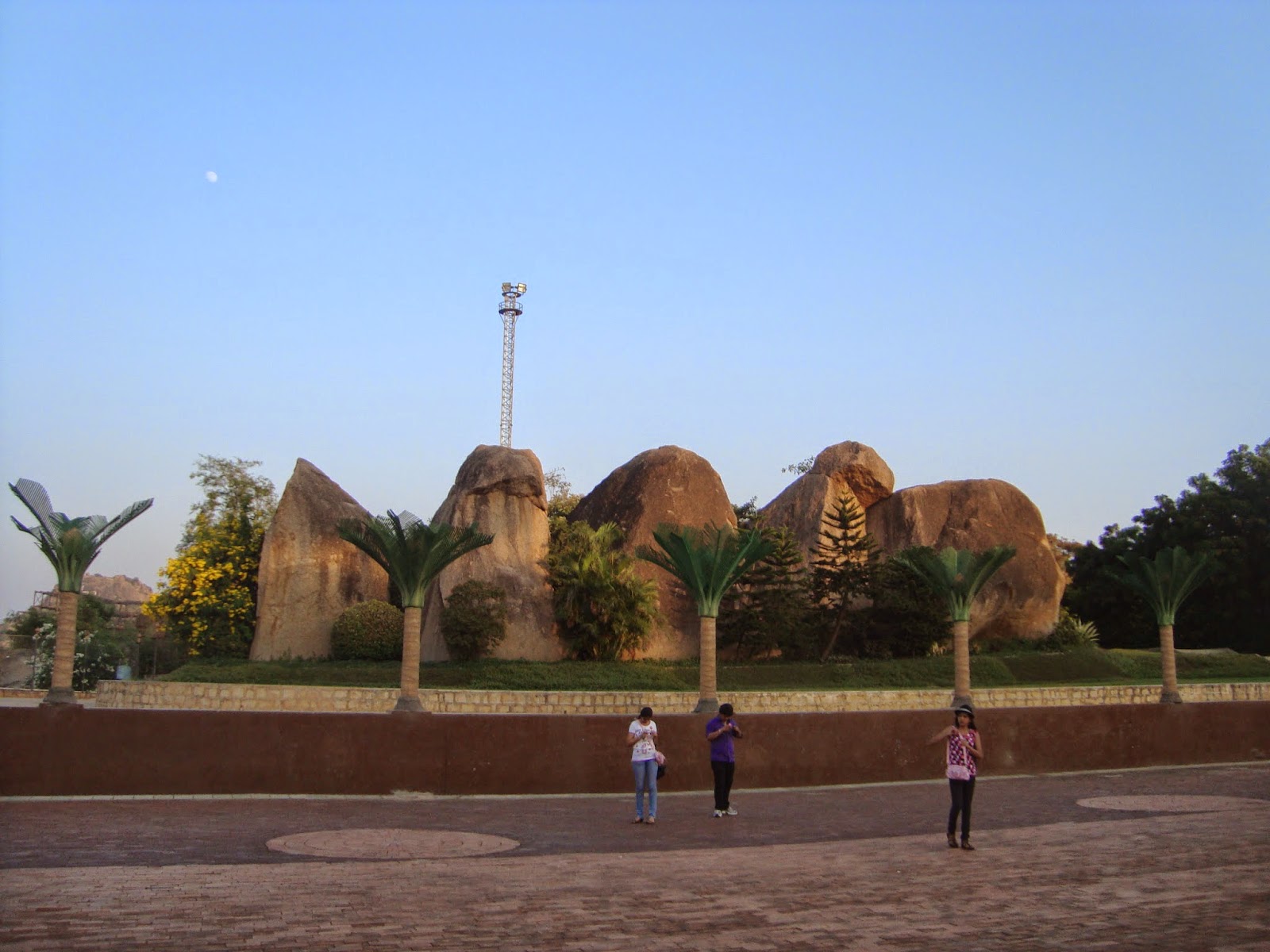
Ramoji Film City - Largest film studio in world

Set up by Ramoji rao, on the sprawling 2000 acre land in 1996. The studio is dream place of thousands, where world class film making facilities are available. Located in the city of Hyderabad, Telangana state of India, the studio has a picturesque avenues and some true believable sets of Vrindavan Garden, Mysore, Delhi's Mughal garden and many more such replicas are built here. Its been a popular tourist center for its natural and artificial attraction, which includes amusement park and some 4D films.
Many Indian and international films have been shoot here. It has been certified by Guinness world record as world's largest film studio.
Make a visit to feel the reel life of cinema


Thursday, 12 June 2014

Udvada Beach

Located 20 km in Parsi colony from Udvada station, Gujarat, India. The beach is quiet place and always cool because of its constant wind flow. The beach carries fishing activities and a good tourist attraction. You can take a look at the Parsi lifestyle through their houses still in traditional style. Evening provides you with beautiful sunset view. You can enjoy horse ride or a boat ride at morning. You can even visit Iranshah Atash Behram, a Zoroastrian fire temple.

For Parsi's lots of hotels and lodge are available but others have to stay at hotels near railway station.

Friday, 23 May 2014

Kanheri caves

Located with in the forest of Sanjay Gandhi National Park, in north Borivali, Mumbai, Maharashtra, India. The caves demonstrate the Buddhist influence on the art and culture of India. The name Kanheri was derived from Sanskrit word Krishnagiri, which means black mountain.
109 caves have been carved from basalt. The caves were used Buddhist for living, studying and meditation. Nearly 51 legible inscriptions and 26 epigraphs are found at Kanheri. Cave number 34 has unfinished paintings of Buddha on the ceiling of the cave. Kanheri caves gives us a beautiful picture of nature. Monsoon is the best season to visit, because the area nourishes better from its origin. You can also enjoy small and large waterfalls from the hilly terrain of the caves.
The cave is located 6km inside Sanjay Gandhi National park, and the visitors have to pay a minimal entry fees at the entrance. Nearest Station is Borivali and regular bus and auto service is available to National park.
On the way to caves one can notice number of birds and animals of National Park.


Sunday, 27 April 2014

Ajanta caves

The  Ajanta Caves are situated at a distance of 107 km north of Aurangabad, the district headquarters. The caves attained the name from a nearby village named Ajanta located about 12 km. These caves were discovered by an Army Officer in the Madras Regiment of the British Army in 1819 during one of his hunting expeditions. Instantly the discovery became very famous and Ajanta attained a very important tourist destination in the world. The caves, famous for its murals, are the finest surviving examples of Indian art, particularly painting.
These caves are excavated in horse–shoe shaped bend of rock surface nearly 76 m in height overlooking a narrow stream known as Waghora. The location of this valley provided a calm and serene environment for the Buddhist monks who retreated at these secluded places during the rainy seasons. This retreat also provided them with enough time for furthering their religious pursuits through intellectual discourses for a considerably longer period. The caves were excavated in different periods (circa. 2nd century B.C. to 6th century A.D.) according to the necessity. Each cave was connected to the stream by a flight of steps, which are now almost obliterated, albeit traces of some could be noticed at some places.
In all, total 30 excavations were hewn out of rock which also include an unfinished one. Out of these, five (cave no. 9, 10, 19, 26, and 29) are chaityagrihas and the rest are viharas. In date and style also, these caves can be divided into two broad groups. The earliest excavations belong to the Hinayana phase of Buddhism of which similar examples could also be seen at Bhaja, Kondane, Pitalkhora, Nasik, etc. In total, 5 caves at Ajanta belong to this phase, viz., 9 & 10 which are chaityagrihas and 8, 12, 13, & 15A which are viharas. These caves are datable to the pre-Christian era, the earliest among them being Cave 10 dating from the second century B.C. The object of worship is a stupa here and these caves exhibit the imitation of wooden construction to the extent that the rafters and beams are also sculpted even though they are non-functional.
The addition of new excavations could be noticed again during the period of Vakatakas, the contemporaries of the Imperial Guptas. The caves were caused to be excavated by royal patronage and the feudatories under the Vakatakas as illustrated by the inscriptions found in the caves. Varahadeva, the minister of Vakataka king Harishena (A.D. 475-500) dedicated Cave 16 to the Buddhist Sangha while Cave 17 was the gift of a prince (who subjugated Asmaka) feudatory to the same king. The flurry of activities at Ajanta was between mid 5th century A.D. to mid 6th century A.D. However, Hieun Tsang, the famous Chinese traveler who visited India during the first half of 7th century A.D. has left a vivid and graphic description of the flourishing Buddhist establishment here even though he did not visit the caves. A solitary Rashtrakuta inscription in cave no. 26 indicates its use during 8th – 9th centuries A.D. The second phase departs from the earlier one with the introduction of new pattern in layout as well as the centrality of Buddha image, both in sculpture as well as in paintings
The world famous paintings at Ajanta also fall into two broad phases. The earliest is noticed in the form of fragmentary specimens in cave nos. 9 & 10, which are datable to second century B.C. The headgear and other ornaments of the images in these paintings resemble the bas-relief sculpture of Sanchi and Bharhut.
The second phase of paintings started around 5th – 6th centuries A.D. and continued for the next two centuries. The specimen of these exemplary paintings of Vakataka period could be noticed in cave nos. 1, 2, 16 and 17. The variation in style and execution in these paintings also are noticed, mainly due to different authors of them. A decline in the execution is also noticed in some paintings as indicated by some rigid, mechanical and lifeless figures of Buddha in some later period paintings. The main theme of the paintings is the depiction of various Jataka stories, different incidents associated with the life of Buddha, and the contemporary events and social life also. The ceiling decoration invariably consists of decorative patterns, geometrical as well as floral.
The paintings were executed after elaborate preparation of the rock surface initially. The rock surface was left with chisel marks and grooves so that the layer applied over it can be held in an effective manner. The ground layer consists of a rough layer of ferruginous earth mixed with rock-grit or sand, vegetable fibers, paddy husk, grass and other fibrous material of organic origin on the rough surface of walls and ceilings. A second coat of mud and ferruginous earth mixed with fine rock-powder or sand and fine fibrous vegetable material was applied over the ground surface. Then the surface was finally finished with a thin coat of lime wash. Over this surface, outlines are drawn boldly, then the spaces are filled with requisite colors in different shades and tones to achieve the effect of rounded and plastic volumes. The colors and shades utilized also vary from red and yellow ochre, terra verte, to lime, kaolin, gypsum, lamp black and lapis lazuli. The chief binding material used here was glue. The paintings at Ajanta are not frescoes as they are painted with the aid of a binding agent, whereas in fresco the paintings are executed while the lime wash is still wet which, thereby acts as an intrinsic binding agent.
Open from 9 A.M. to 5 P.M.
Closed on Monday
Entrance Fee:
Citizens of India and visitors of SAARC (Bangladesh, Nepal, Bhutan, Sri Lanka, Pakistan, Maldives and Afghanistan) and BIMSTEC Countries (Bangladesh, Nepal, Bhutan, Sri Lanka, Thailand and Myanmar) - Rs. 10 per head.
Others: US $ 5 or Indian Rs. 250/- per head
(children up to 15 years free)

Friday, 25 April 2014

Mandapeshwar cave


Located in Borivali taluka of Mumbai Suburban district, Mandapeshwar cave, being associated to Shaiv sec Brahmanical rock-cut architecture. This cave consists of a main garbhagriha, antarala, mandapa and open space called prangana in front of it. Provision of stair cases at the level of mandapa is provided, where on its both sides, lions are depicted. Few Shaivaite narrative panels including Natraj, image of Lakulisa in Vyakhyana mudra  are sculpted here. From influence like its counterparts in Ajanta and Aurangabad can be noticed and thus, construction of this cave can approximately be placed in the first quarter of 6th century AD. During the time of Portuguese occupation some addition were done in the form of cells and church above the cave.


Wednesday, 16 April 2014

Shiv Khori

Shiv Khori is situated in Reasi district of Jammu and Kashmir state of India. The famous cave shrine is full of natural impression and images of various Hindu god and goddesses, and a naturally formed Shiv Ling. It symbolizes the power behind its creation. An 8 to 10 km slightly upward walk, parallel with a downward flowing river is well constructed  for pilgrims. The entrance of cave has a capacity of around 300 to 400 people and the way to inner chamber is adventures. You need to pass out from narrow gap where, even a man can't stand erect. We have to bent, crawl and slide to reach the inner sanctum, there we can see a 4 meter Shiv Ling bathing with milky fluid falling naturally from roof top. This process of bathing in Hindu scripture is known as Abhishekh of Lord Shiva. Now a wide tunnel for the easy entry and exit of pilgrimage has been constructed by the government. One can also enjoy horse ride instead of 8 km walk to shrine.  The area around is beautiful and amazing with a picturesque natural beauty. It is believed that a tunnel from inner chamber opens at Amarnath cave, another famous cave of Lord Shiva. There we can see a naturally formed Shiv Ling of snow, which never melts. Many Sadhu and worshipers have tried to travel through such tunnels but never returned back, hence the government has closed the tunnel to Amarnath.
There are many tourist vehicle which will take you to shiv khori from Jammu city.
                                             
                                                         River parallel to way to shrine
                                                         Resting halts for the walkers
                                                                Fun with nature
                                                            The horse ride to shrine
                            Me with some Dhol (instrument) player on my way. They entertain pilgrimers.
                                                               The cave of Shiv Khori

Saturday, 1 March 2014

Asia's 2nd largest red light district:KAMATHIPURA

My visit to this place screened me few realities of greed, need and helplessness. BMC every year undertake two to three building for redevelopment, but the lanes here are still 100 years old, dirty, stinky, non-walk able and wooden made. Yet you can see branded cars all around. During 1795, workers from Andhra Pradesh were migrated to South Mumbai to built a causeway uniting all seven islands of Bombay. Those workers were called Kamathis and the place was their residence, hence named Kamathipura.  In 2005 state government of Maharashtra banned dance bars and many dancing girls, who couldn't find any means of income, moved here as prostitutes. Currently there is no place for these sex workers to sit with their customers, hence they hang around the streets, solicit customers and rent an available bed. As we go back to history, we learn that, during 19th and early 20th century, number of women and girls from Japan and Europe were trafficked to Kamathipura, for British soldiers and local Indian men. From there the major business began.
The lanes here are famous for its uniqueness--
1) Safed Gully (white Lane) was a house of Europe prostitutes during British rule
2) Bachchuseth ki wadi was famous for its tawaifs and mujras. It was also the frequent point of Mumbai underworld.

We the high class or good society people treat them inferior or pity on them, but we visit them first. We are the one who make them do this, by asking to spend a night for a job, casting couch, bringing girls from villages and small towns for job or marry them and later sell them to these brothels. Only 10 to 15% of girls work for enjoyment or with their own consent, but the other are put in this business by force or they work for basic needs. Today girls from south India, central India, east India and Nepal are trafficked more into this business.
Here girls are not know by their names, instead by their rates. Many couple from Rajasthan, Haryana and other northern states sell their girl child, just for the greed of a male child. If a women can't give birth to a male child, she would be ask to divorce her husband or will be send back to her parents house, even the girls own parents don't reside her, just for their respect in society. And all these things, don't just happens with low cast or illiterate people. Even the highly qualified and rich people practice such crime.

Whole India rose their voice for Delhi gang rape victim; here every day hundred of girls are raped, but we care a damn. Because we are not yet finished criticizing the government or laws and orders.

Everybody wants change, but without changing our self, "You change yourself, but I won't". The first thing that should change is, "Not I, It should be WE". And to make difference in society one don't have to attain any rally or Anshan (fast), just change you thinking and be equal to all. Automatically your children or young one's will imitate you and at their early age teach them the lesson of WE, help and good deeds and ask them to pass it to their child or young one's when they grow old. This chain of goodness will bring a change in mindset of people.

Its said, "The change began's from us"  


Thursday, 28 November 2013

Best Beaches in India

There are en-number of beautiful beaches in India and here are the best one's-

1) Gujarat
   a) Diu beach
   b) Umbergam beach
   c) Tithal beach
   d) Daman beach
   e) Veraval or Somnath beach
   f) Udvada beach

2) Maharashtra

   a) Kelwa beach
   b) Arnala beach
   c) Marve beach
   d) Madh beach
   e) Aksa beach
   f) Versova beach
   g) Juhu beach
   h) Band Stand
   i) Girgaum beach
   j) Ganpatiphule beach

3) Goa
   a) Anjuna beach                                            
   b) Baga beach                                                        c) Calangute beach
   d) Colva beach                                                                               
4) Kerala
   a) Alappuzha beach
   b) Cherai beach
   c) Fort Kochin
   d) Kovalam beach
   e) Kollam beach
   f) Varkala beach
   g) Poovar beach